
Office Chair Butt guide
Desk exercises for active work breaks
When you want more movement than a stretch, try a few simple exercises beside your desk. These no-equipment options use a stable chair, a little floor space, or a short walk.
Start here
These are movement ideas for a general workday, not a fitness test. Clear a little space, use a stable chair without wheels, and choose a pace you can control. Stop if you feel pain or dizziness. If an injury or health condition changes what movement is suitable for you, seek individual guidance from a qualified professional.
On this page
The exercises
The repetition counts below follow the starting examples in the linked NHS guides. Do fewer if that is more comfortable, and keep each movement controlled.
01
Sit-to-stand
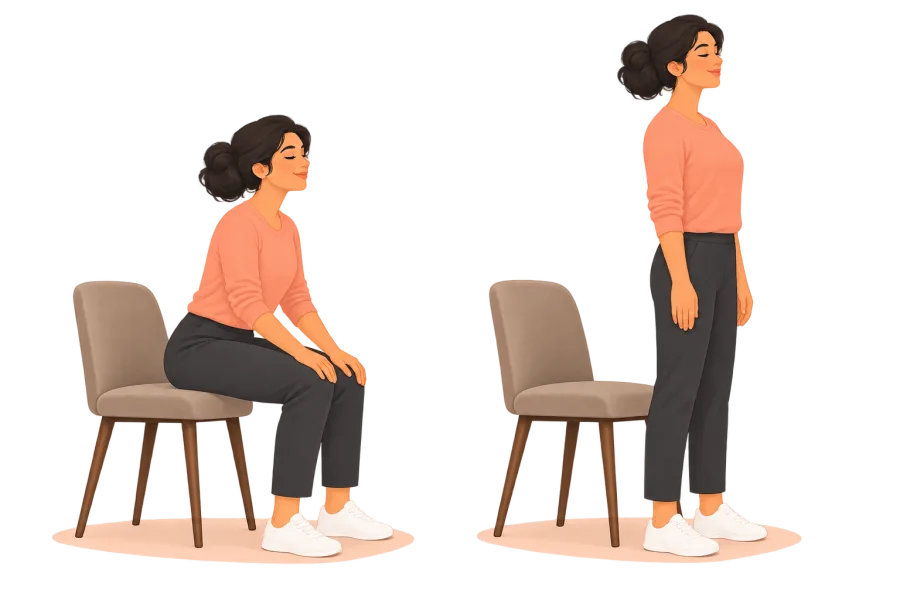
- Sit near the front of a stable, nonwheeled chair with your feet hip-width apart.
- Lean forward slightly and stand up slowly, using your legs as much as you comfortably can.
- Lower yourself back with control and repeat.
Keep in mind: Keep the chair from sliding. Use its arms for support if you need them.
Source: NHS, Strength exercises.
02
Standing calf raises
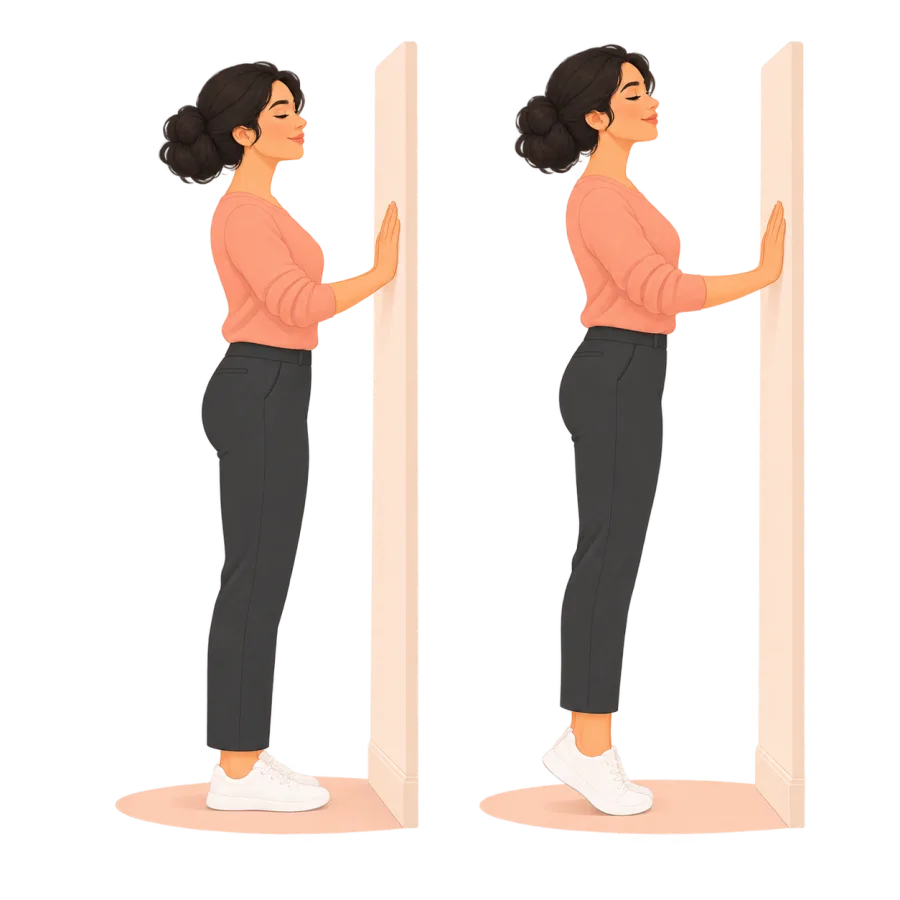
- Stand tall beside a wall or stable surface you can touch for balance.
- Lift both heels off the floor slowly, rising onto the balls of your feet.
- Lower your heels with control and repeat.
Keep in mind: Keep the movement small if balance feels uncertain.
Source: NHS, Strength exercises.
03
Sideways leg lifts
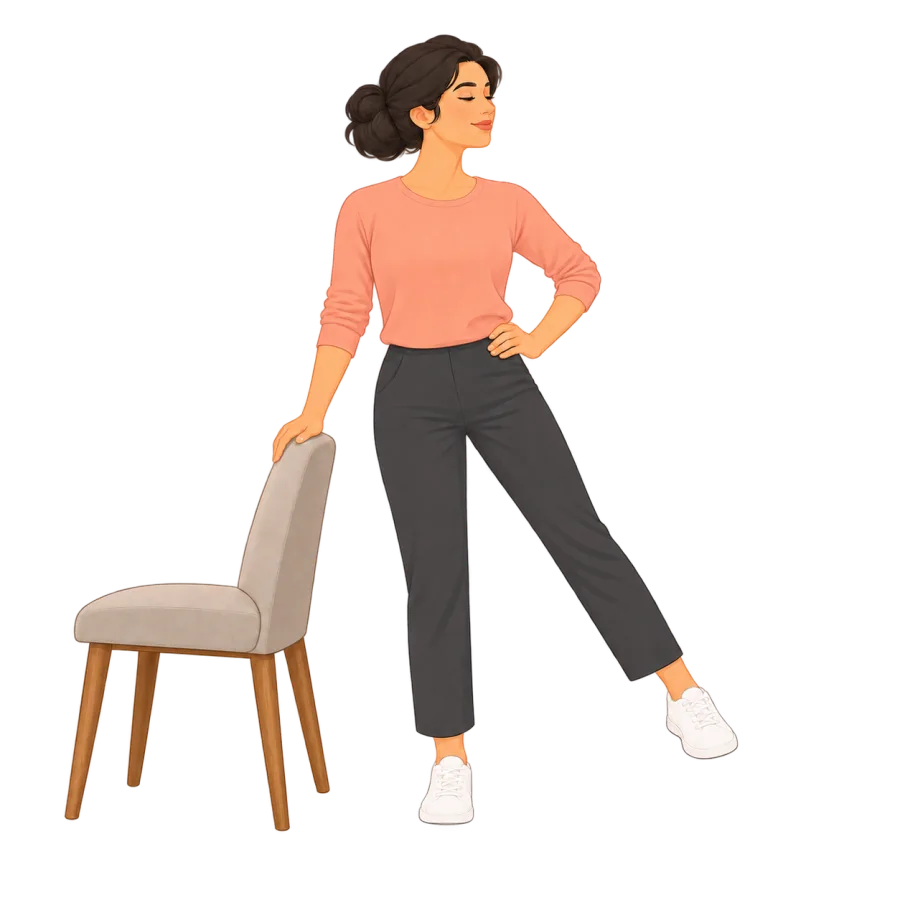
- Stand beside a stable chair or wall and hold it for balance.
- Keep your body upright as you move one leg slowly out to the side.
- Bring it back with control, then repeat before changing legs.
Keep in mind: Keep your toes facing forward and avoid leaning your torso sideways.
Source: NHS, Strength exercises.
04
Seated hip marching
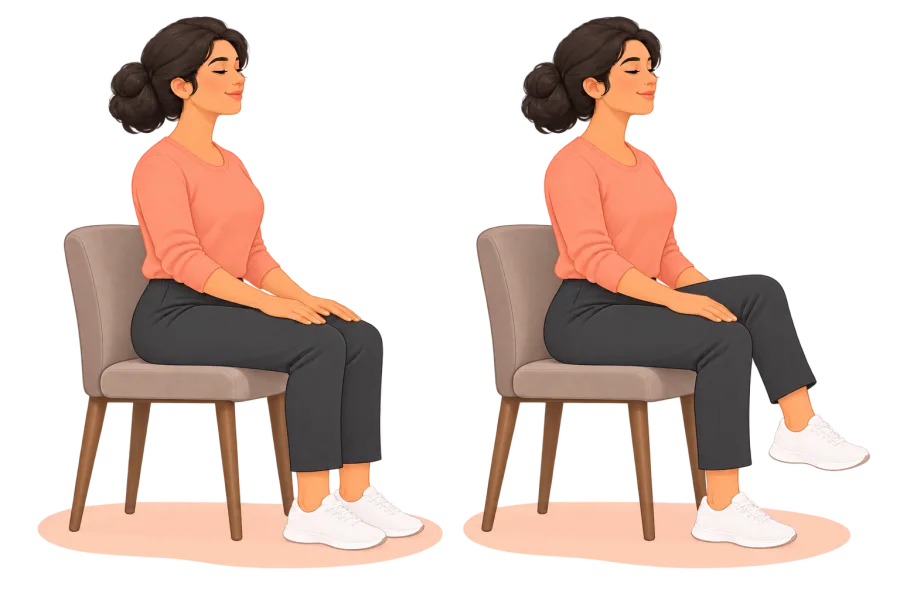
- Sit upright in a stable chair with both feet flat on the floor.
- Lift one knee toward the ceiling as far as is comfortable without leaning back.
- Lower your foot, then lift the other knee.
Keep in mind: Move slowly and keep your back supported if you need to.
Source: NHS, Sitting exercises.
05
Mini-squats
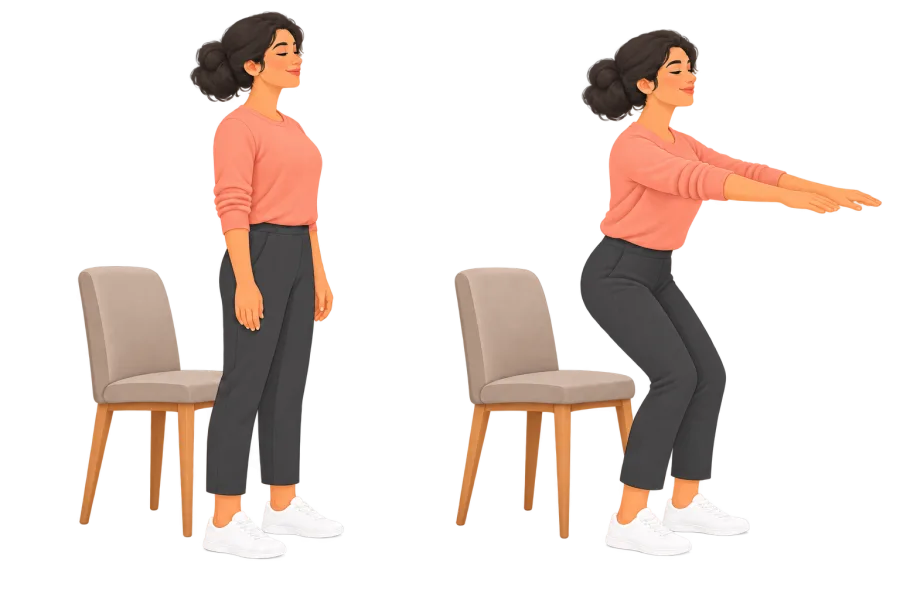
- Stand with feet hip-width apart near a stable surface for support.
- Bend your knees a little, as if beginning to sit, while keeping your heels down.
- Straighten back up slowly and repeat.
Keep in mind: A shallow bend is enough; keep the movement controlled.
Source: NHS, Strength exercises.
06
A short walk
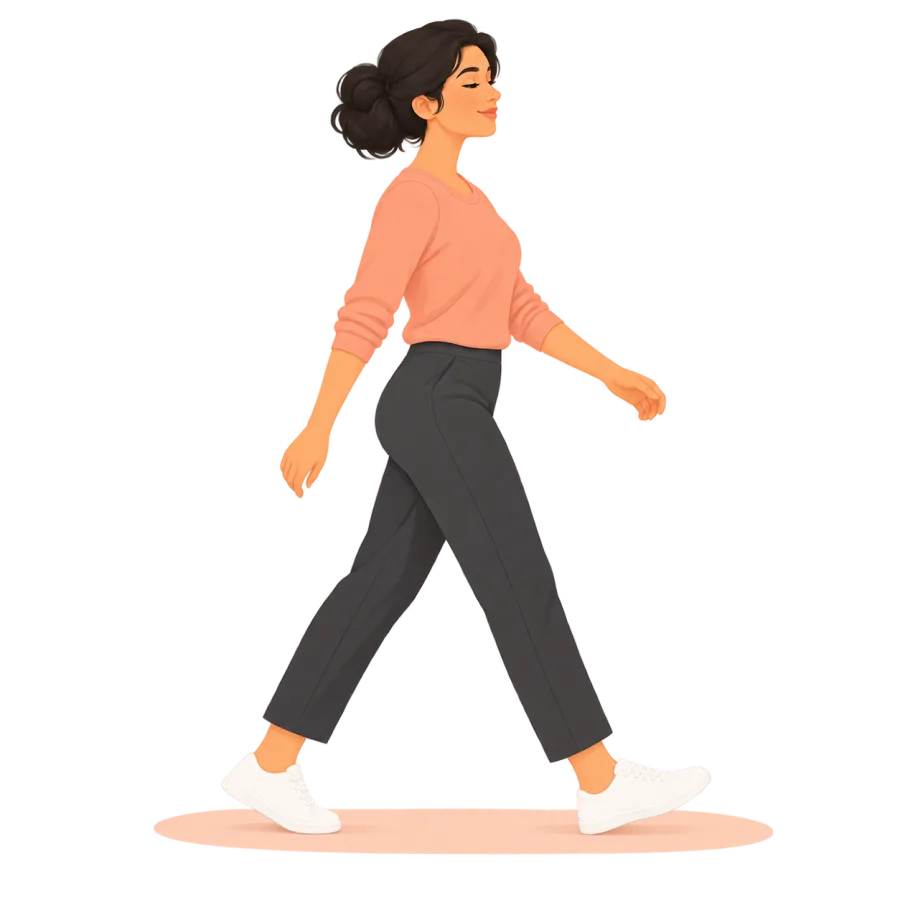
- Stand up from your workspace and check that the route is clear.
- Walk to refill water, reach a shared area, or take a loop nearby.
- Return when it fits your break and workday.
Keep in mind: Choose a route and pace that suit your space and mobility.
Source: National Center on Health, Physical Activity and Disability, Deskercise.
Build a short work break
Between meetings: Try five sit-to-stands, five calf raises, then a short walk. You can keep the whole sequence close to your desk.
If you need to stay seated: Try five hip marches on each leg, then stand or walk when you have room to do so.
When you have more floor space: Try five side leg lifts per leg, five mini-squats, and a comfortable walk. Skip any movement that does not suit your balance or space.
Looking for a slower pause? Our desk stretches guide focuses on gentle mobility instead.
Sources and further reading
Movement steps and suggested counts above are adapted in original wording from these public health and exercise references. Follow each source for fuller demonstrations and context.
- NHS, Strength exercises
- NHS, Sitting exercises
- National Center on Health, Physical Activity and Disability, Deskercise
This guide shares general movement ideas, not personal medical advice. Read the Wellness Disclaimer, or visit Support for website questions.