Office Chair Butt guide
Desk stretches for a gentler workday
A handful of easy movements can fit between messages, meetings, and everything else on your desk. These seated and standing stretches give you a clear place to start.
Start here
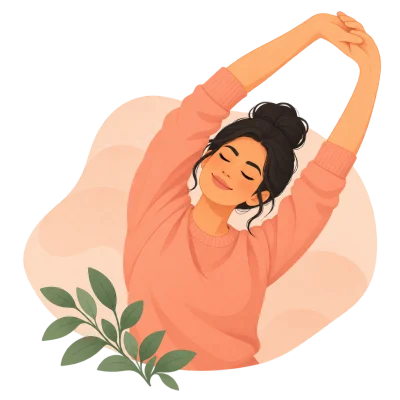
You do not need to complete every stretch. Pick two or three that suit your space and what feels comfortable today. Use a stable chair without wheels for seated movements, move slowly, breathe normally, and stop if a movement hurts. If you have an injury or a condition that affects movement, ask a qualified health professional what suits you.
On this page
The stretches
Start in an easy range of motion. The counts below come from the linked references; they are a starting point, not a target to push through discomfort.
01
Seated neck rotation
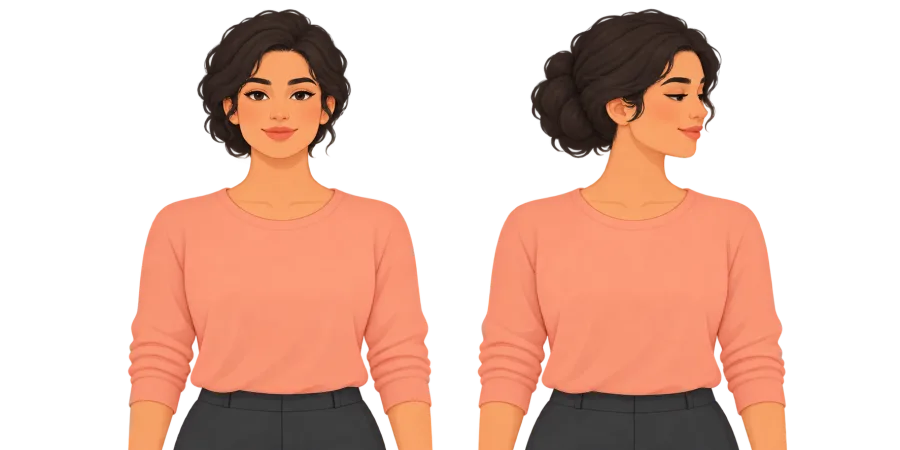
- Sit upright with your shoulders relaxed and look ahead.
- Slowly turn your head toward one shoulder, keeping your chin level.
- Hold for about 5 seconds, return to centre, then repeat on the other side.
Keep in mind: Turn only as far as feels comfortable; avoid pulling your head with your hand.
Source: NHS, Sitting exercises.
02
Shoulder rolls
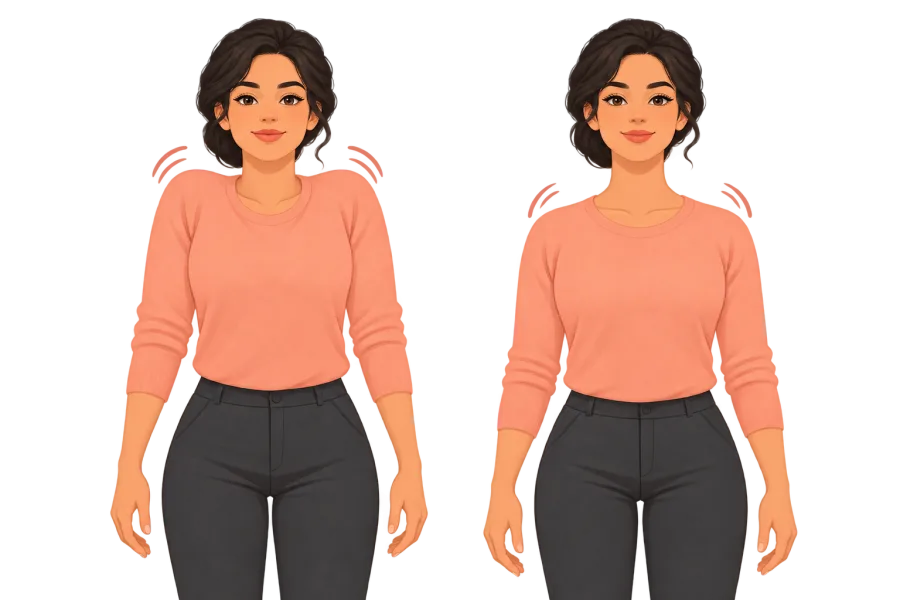
- Let your arms rest by your sides.
- Lift your shoulders gently toward your ears, roll them back and down.
- Repeat at an easy pace, then change direction.
Keep in mind: Make the motion smooth and keep breathing.
Source: Health and Wellbeing Queensland, Desk stretches at work.
03
Seated chest opening
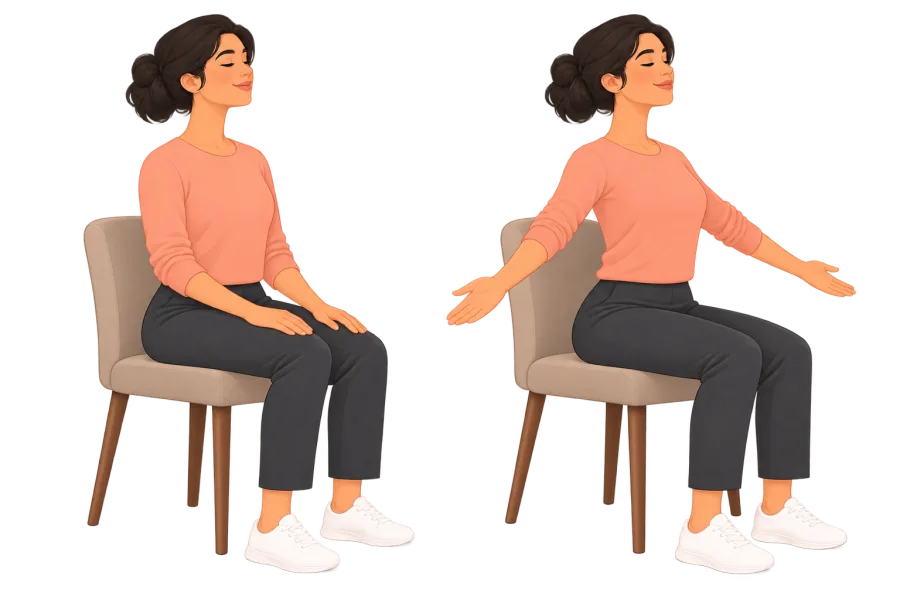
- Sit upright away from the back of a stable chair.
- Draw your shoulders back and down, and extend your arms out to the sides.
- Gently lift your chest until you feel a stretch, hold, then relax.
Keep in mind: Keep your lower back comfortable; a small movement is enough.
Source: NHS, Sitting exercises.
04
Upper-body twist
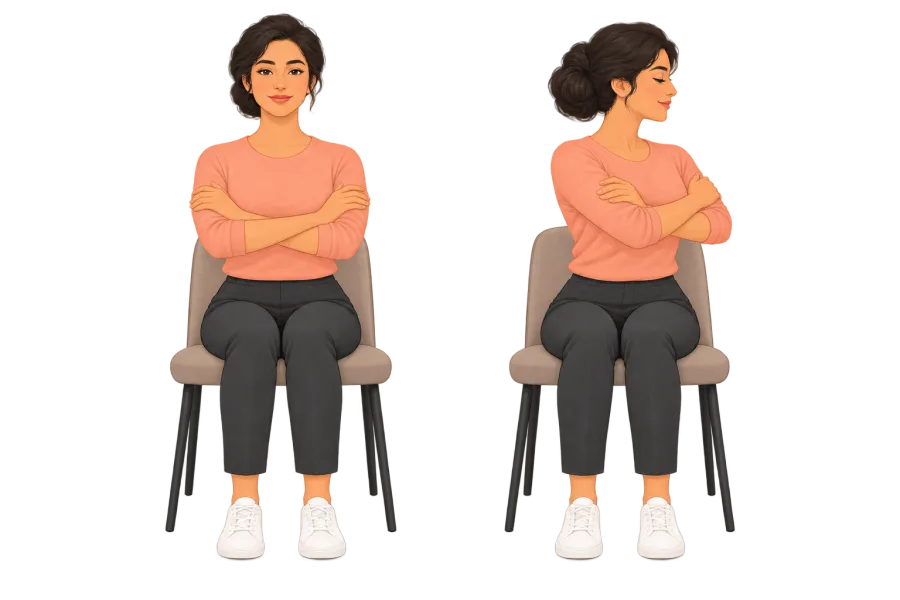
- Sit upright with both feet on the floor.
- Cross your arms over your chest and turn your upper body slowly to one side.
- Pause, come back to centre, then turn the other way.
Keep in mind: Keep your hips facing forward and avoid forcing the turn.
Source: NHS, Sitting exercises.
05
Wrist and forearm stretch
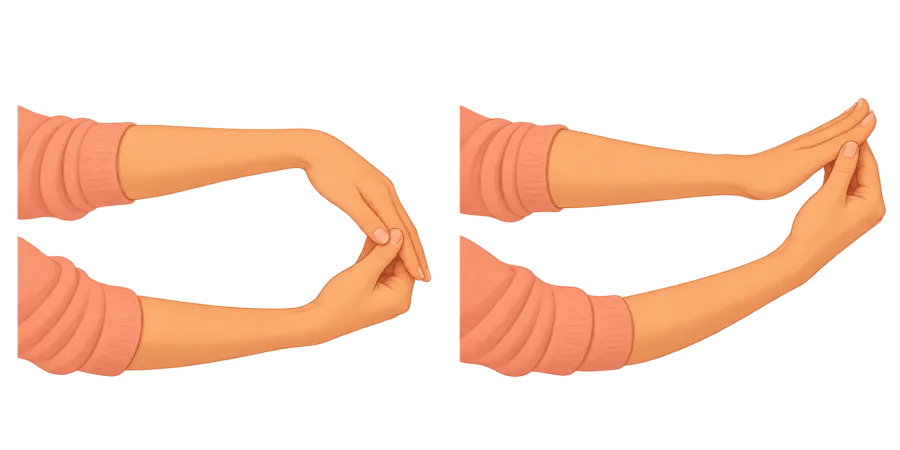
- Extend one arm in front of you with the elbow relaxed.
- Use your other hand to hold the fingers and slowly bend the wrist down until you feel a mild stretch.
- Release, then gently bend the wrist up. Repeat on the other arm.
Keep in mind: Use light pressure. Skip any position that causes tingling or pain.
Source: Canadian Centre for Occupational Health and Safety, Office stretches.
06
Standing calf stretch
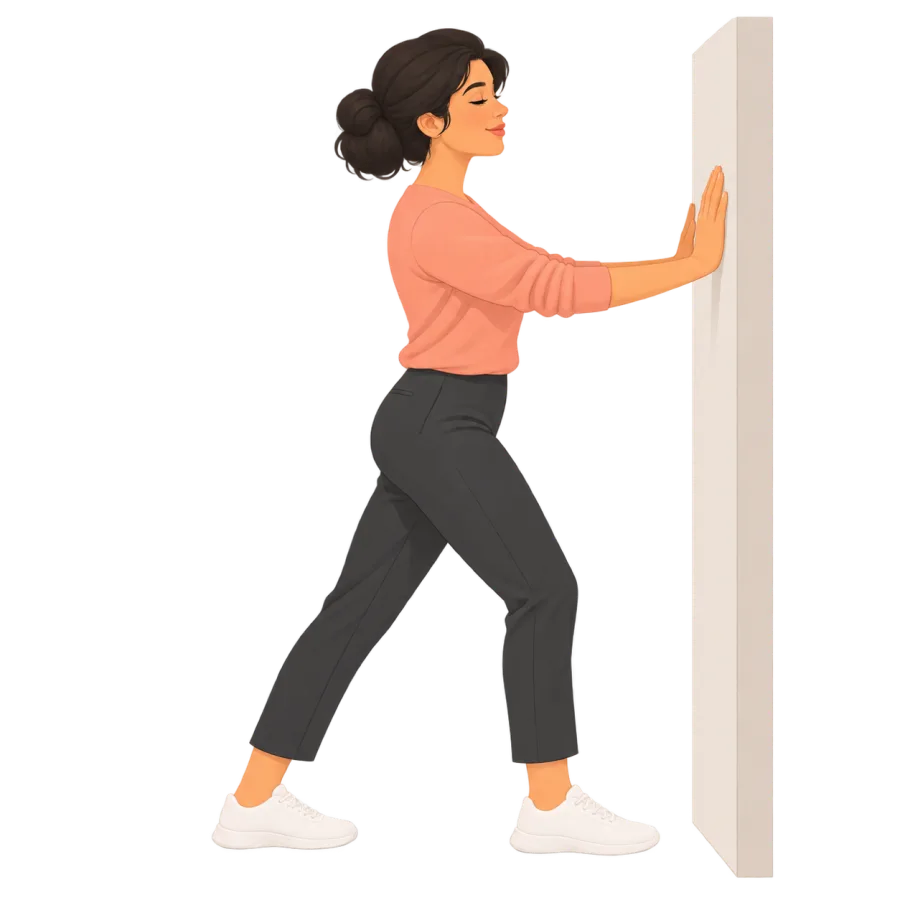
- Stand facing a wall or stable surface and place your hands on it for balance.
- Step one foot back, keeping that heel on the floor, the back leg comfortably straight, and both feet pointing forward.
- Lean forward slightly until you feel a gentle stretch in the back calf, then switch legs.
Keep in mind: Shorten your stance if the stretch feels too strong; do not bounce.
Source: Health and Wellbeing Queensland, Desk stretches at work.
Put a few together
If you need to stay seated: Try neck rotations, chest opening, and an upper-body twist. Move calmly between them and skip anything that feels awkward.
If you can stand: Roll your shoulders, add a gentle calf stretch at a wall, then take a brief walk before returning to your desk.
You can return to one movement later rather than fitting everything into a single break. For more active ideas, see our desk exercises guide.
Sources and further reading
Movement steps and suggested counts above are adapted in original wording from these public health and exercise references. Follow each source for fuller demonstrations and context.
- NHS, Sitting exercises
- Health and Wellbeing Queensland, Desk stretches at work
- Canadian Centre for Occupational Health and Safety, Office stretches
- Mayo Clinic, Desk stretches
This guide shares general movement ideas, not personal medical advice. Read the Wellness Disclaimer, or visit Support for website questions.