
Office Chair Butt guide
What is “office chair butt”?
“Office chair butt” is an informal phrase for concerns about how long hours of sitting and too little overall movement may affect the gluteal muscles or the way someone’s bottom looks. It is not a medical diagnosis. Sitting in a chair does not, by itself, mean your muscles have stopped working.
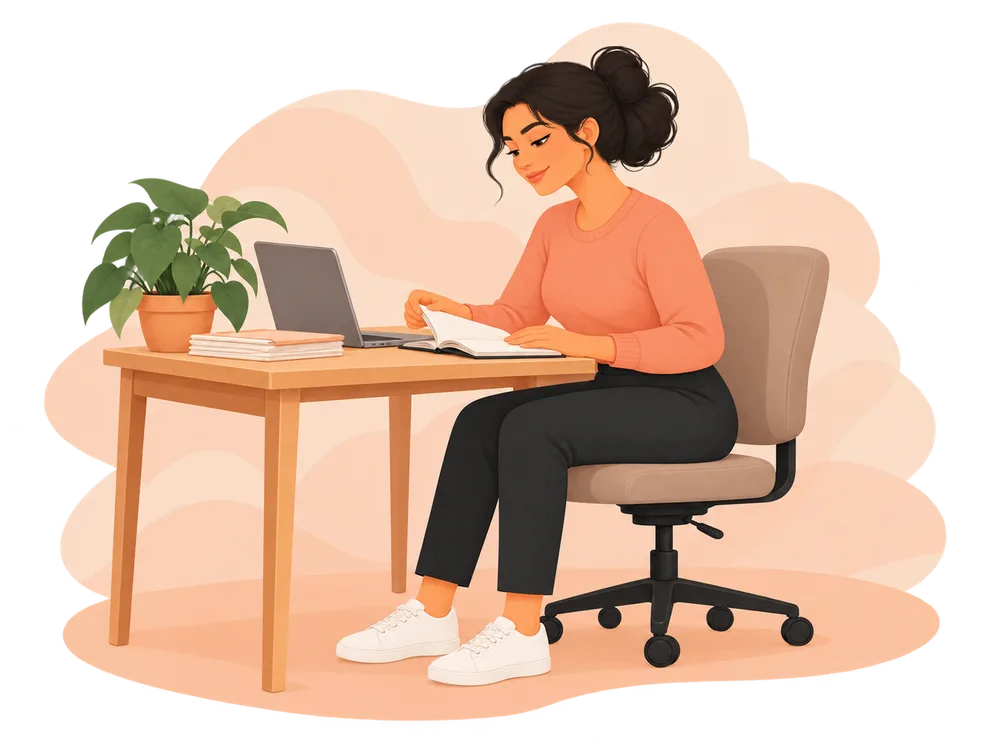
The short answer
The phrase caught on because many people recognize the experience behind it: a workday can pass with barely a change of position. Some use “office butt” to mean the same thing. The name often focuses on appearance, but appearance alone cannot tell you whether a muscle is weak or why you feel uncomfortable. A more useful question is whether your day gives you chances to move in ways that feel manageable.
On this page
What may long periods of sitting affect?
Staying in one position for a long stretch leaves fewer opportunities to use your legs, hips, and the rest of your body. A static computer-work posture can also contribute to local fatigue or discomfort. That does not mean every ache is caused by sitting, or that a particular chair has changed the shape of your body.
The broader evidence supports reducing sedentary time and replacing some of it with activity, including light movement. The World Health Organization’s physical activity guidelines frame this as an overall habit, not a test of one muscle or a promise that a brief break will undo every effect of a sedentary day. OSHA’s workstation guidance likewise encourages changing position, stretching, standing, and walking periodically.
Do your glutes really “switch off”?
“Dead butt syndrome” and “gluteal amnesia” are memorable expressions, but they should not be read as a diagnosis that sitting automatically switches a healthy muscle off. The glutes still take part in everyday actions such as standing and walking. A review of the muscle-amnesia theory found limited support for persistent neural “inhibition” from reduced use in otherwise healthy people. The exact reasons for a person’s pain, weakness, or change in movement need individual assessment.
It is reasonable to want more variety in your day without treating a social-media label as a medical finding. Cleveland Clinic’s overview also points toward more opportunities to move and use the glutes, rather than blaming the chair itself.
What can you do during a desk day?
Choose a change that fits the moment. You do not need a special chair, a perfect break interval, or a full routine between every meeting.
- If you need to stay seated: Adjust your position, move your ankles, or try gentle seated hip marching in a stable chair. The NHS sitting-exercises guide shows how to do hip marching and other seated movements.
- If you can stand: Get up for a short walk, or try a controlled sit-to-stand from a stable, nonwheeled chair. Our Desk Exercises guide gives steps and source links for these and other active options.
- If a gentler pause sounds better: Change position and choose a comfortable upper-body movement from Desk Stretches. You can leave any movement that does not suit you.
Small cues may help: stand while taking a suitable call, walk to refill water, or put a brief pause between tasks. The aim is to make movement easier to repeat, not to make every workday look the same.
When should you ask a healthcare professional?
If pain, weakness, or numbness persists, keeps returning, limits everyday activity, or worries you, talk with a qualified healthcare professional rather than trying to diagnose it from this phrase. Ask for individual advice before trying unfamiliar exercises if you have an injury, a health condition, or are unsure what is suitable. Stop a movement that causes pain or makes you feel unwell. The NHS exercise safety guidance makes the same distinction between general exercise and treatment for a condition.
New bladder or bowel problems, numbness around the genitals or bottom, or rapidly worsening leg weakness alongside back symptoms need urgent medical assessment; see the NHS back-pain advice for those warning signs.
Sources and further reading
This guide summarizes general-wellness and occupational-health information. These references provide more detail and, where relevant, demonstrations.
- Cleveland Clinic, What’s “Office Chair Butt”?
- World Health Organization, Guidelines on physical activity and sedentary behaviour
- OSHA, Computer Workstations: Good Working Positions
- UK Strength and Conditioning Association, An examination of the muscle amnesia theory
- NHS, Sitting exercises and Strength exercises
- NHS, Back pain: when to get help
This article is general-wellness information, not a diagnosis or personal medical advice. Read our Wellness Disclaimer.